
Link to the published article

This new study shows how Arrernte and Warlpiri families and young children talk together at home. Adults get and keep children’s attention and engage children in talking by using both speech and action.
Adults talk to children about what is going on around them. They use an up-and down voice style (part of Baby Talk or child-directed speech), change their voices to make them interesting and use hand signs and gestures to make talking interesting for the children. This helps to promote children’s language learning by helping them to have positive experiences when communicating.
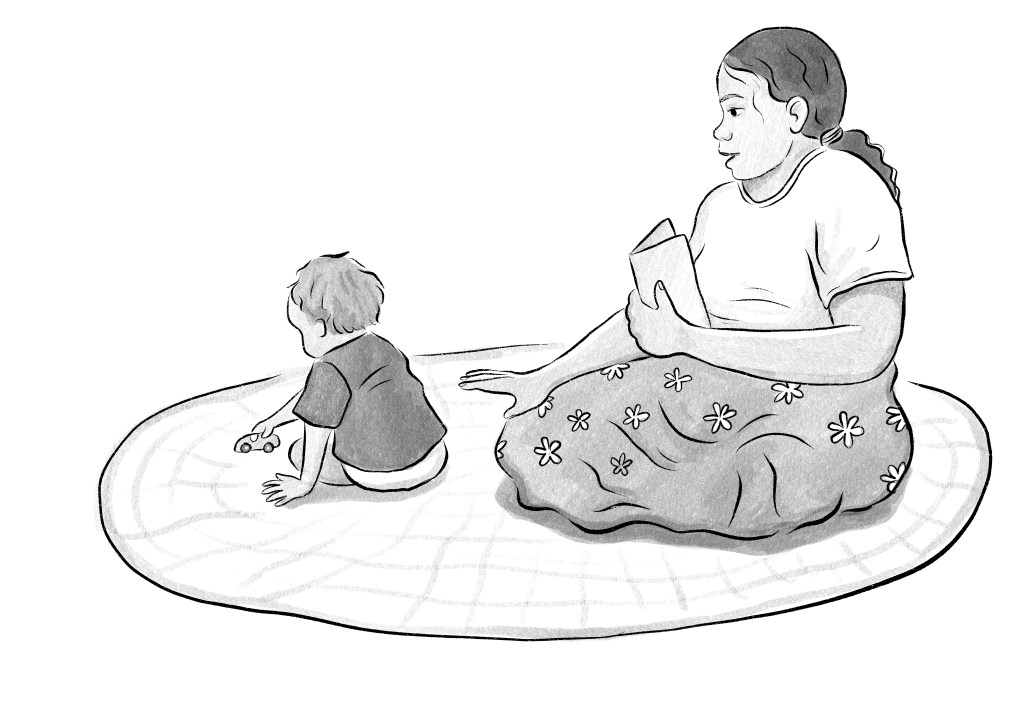
In picture 2, a grandmother taps her grandchild gently on his back and calls his name to get his attention. She tells the child in Warlpiri how to greet a visitor and to shake hands with her, and points to the visitor.
2. Adult: Jikan yungkarla! Rdaka nyangka rdaka rdaka!
‘Shake hands! Hand, look, hand, hand!’
The child reaches to visitor to shake hands.
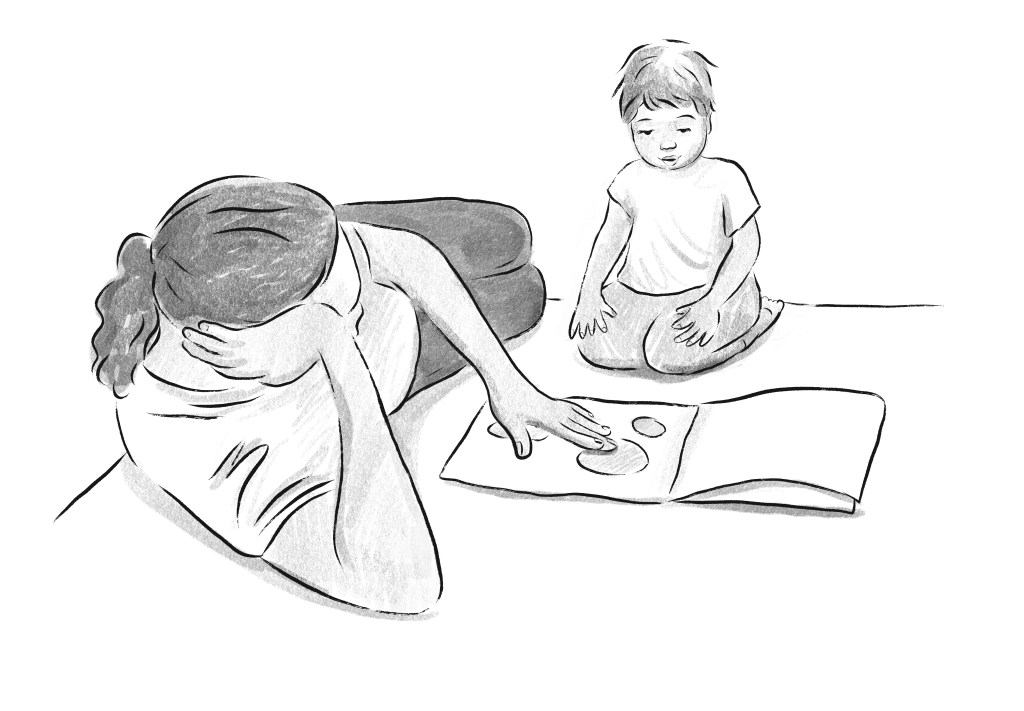
In picture 3 a grandmother names the characters in a picture book with kinship names and points to each character as she names them.
3. Adult: Ah alo mameye atyeye yaye
‘Ah hello mummy, younger sibling, elder sister’
The grandmother points to and then touches each of the characters in the picture.
Arrernte terms like ‘younger sibling’ or ‘elder sister’ express aspects of Arrernte language and culture that differ slightly from non-Aboriginal language and culture; they are culturally-specific.
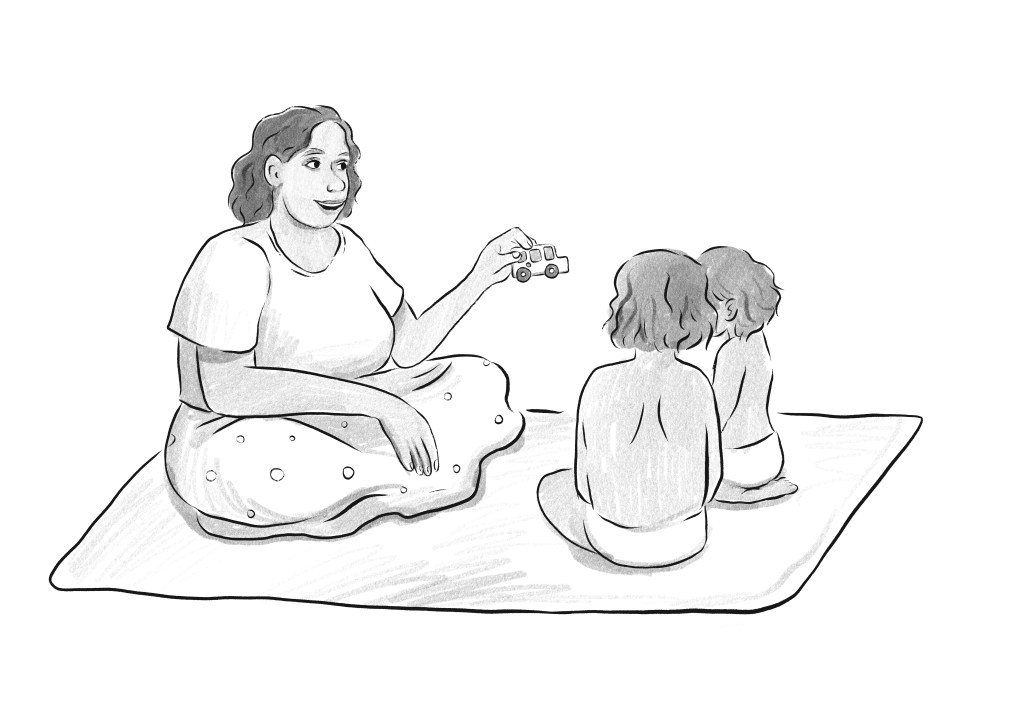
4. Adult: An nyiya ampu-j [nyampu-ju]
Holds object for the children to see
‘And what’s this?’
Child: Bu ba! [bush bus]
Adult: Bush bus!
In picture 4, an adult holds up toy for the children to focus on and asks in Warlpiri, “An nyiya ampu-j?” ‘What’s this?’ The children show that they know the name of the ‘bush bus’. This connects the play world to the children’s real world, a pre-literacy skill practice.
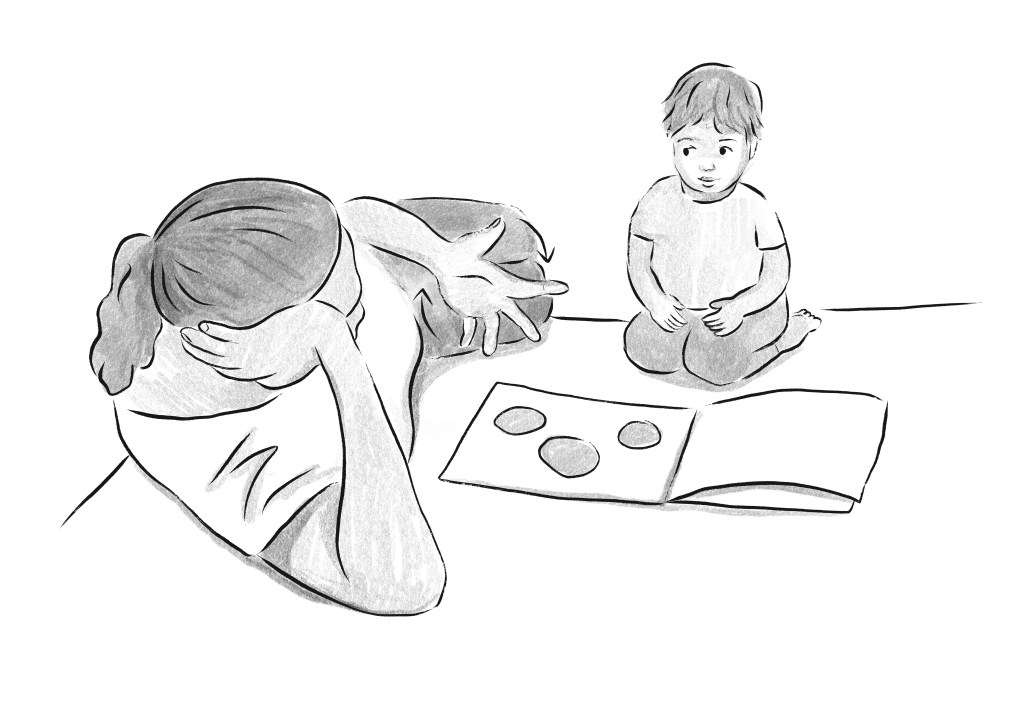
5. Adult: Alha alha alha mamu alha oh
‘Go away monster, go away! Oh’
Adult: Mamu itye
SIGN: ‘NOTHING’
‘The monster is not there’
Picture 5 shows a grandmother using the hand sign ‘NOTHING’ to her grandchild. This refers to a picture in the picture book where the monster is not present. Children and adults use hand signs and gestures as well as speech in everyday communication. The adult models how to speak as if the character in the story was speaking, saying ‘go away’ in Arrernte.
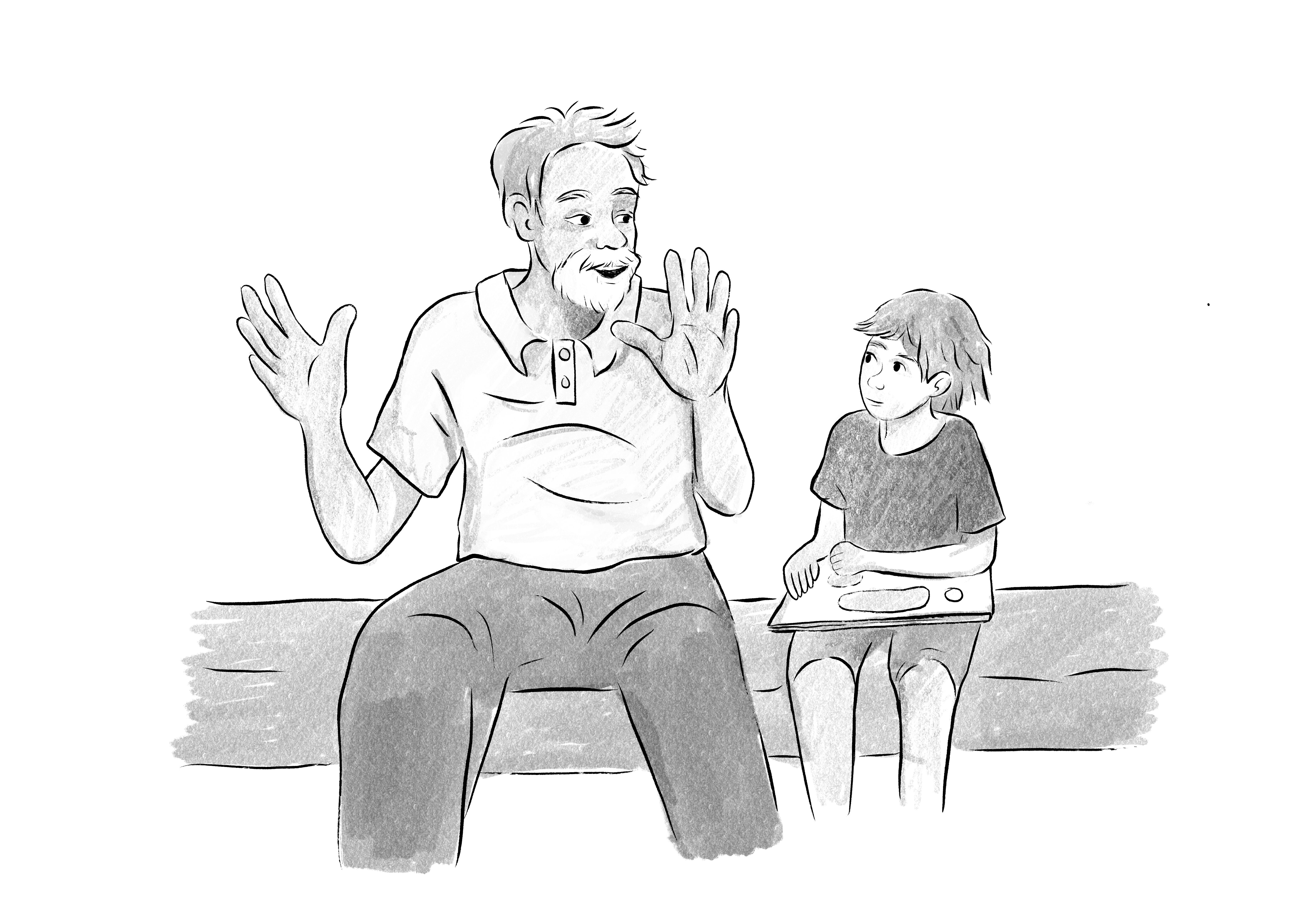
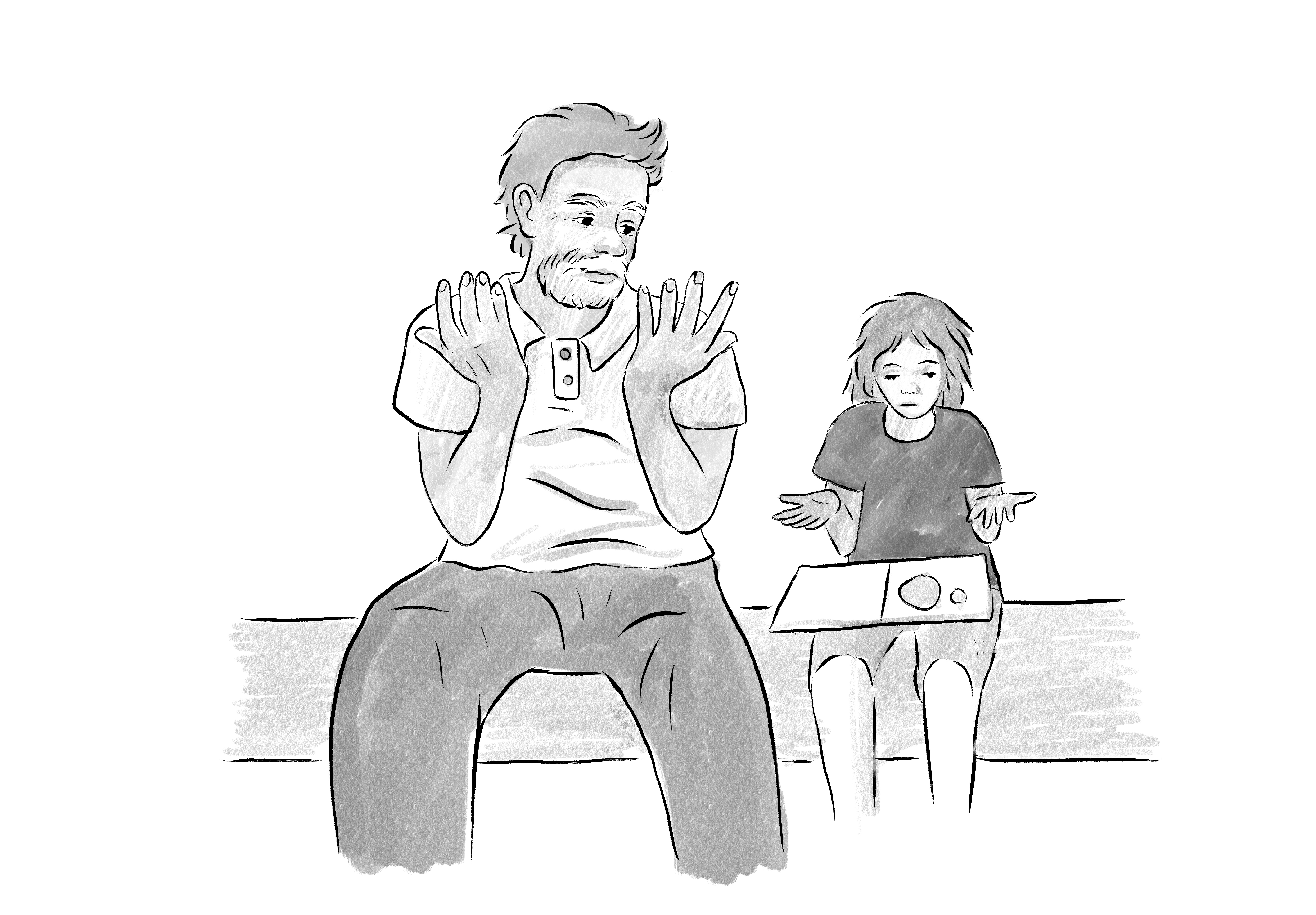
6. A grandfather shows his granddaughter which hand action to do and to say in Warlpiri “yakarra!” ‘oh no!’.
6. Adult: Kujarra kujarra kujarra kujarrayi!
‘Like this, like this, like this, like this’
Adult models action
Adult: Nyampu-piya kujarra ya::ka::!
‘Like this, like this, oh no!’
Adult touches the child; models action
Child: Ya::ka::!
‘Oh no!’
The child holds her arms out, imitating her grandfather and the characters in the story
By modelling this type of action and speech, the grandfather helps the child to connect emotionally with the characters in the picture book.
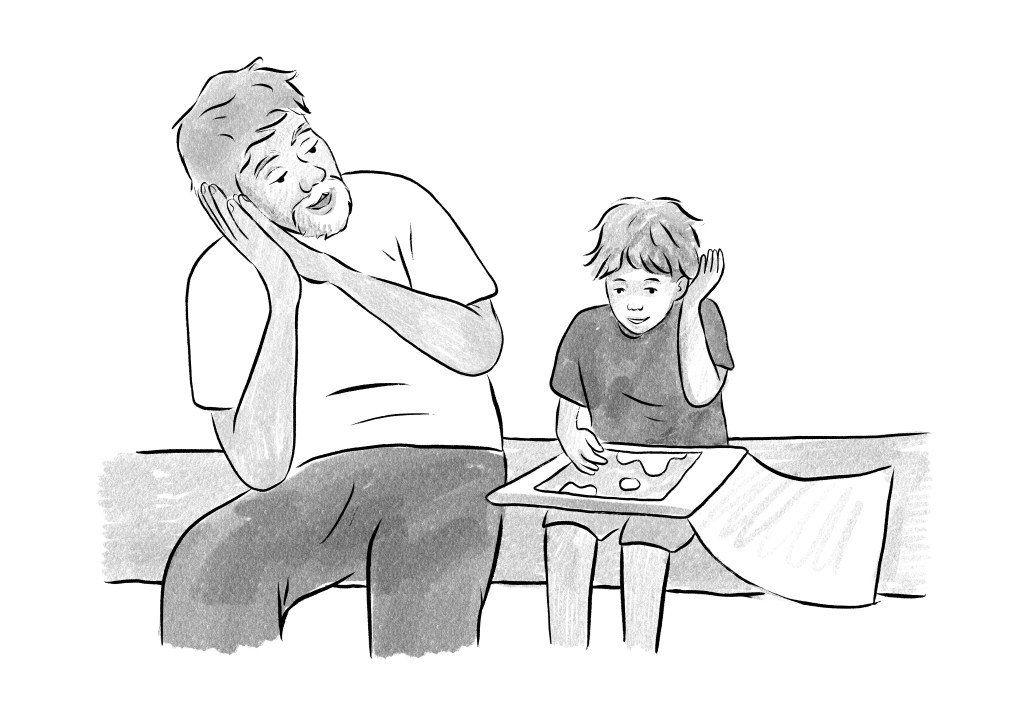
7. Adult: Aapa mamu nthakenhe-irreme
‘What is this monster doing?’
SIGN: SLEEP
Child: Alakenhe
‘Like this’
The child moves one hand to side of her head and then shifts her body, imitating a sleeping position
Adult: Aapa mamu nthakenhe-irreme
‘What is this monster doing?’
SIGN: SLEEP
Adult: Ankwe inteme athewaye
‘It’s sleeping, isn’t it?’
In picture 7 the grandfather asks in Arrernte what the monster in the story is doing. He does the sign for SLEEP. The child answers in Arrernte, “alakenhe” ‘like this’, and imitate the sign for SLEEP. Again this helps the child to engage with the characters in the the story and to express herself using both speech and actions.
Learn more about this study by reading the published article here
 Ketyeye akweke angkentye akaltye-irreme | Kurdu-kurdu kuja kalu yimiki pina-jarrimi